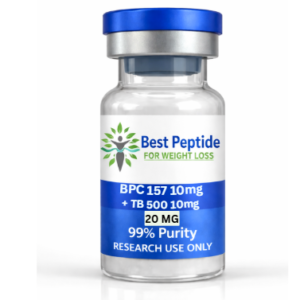
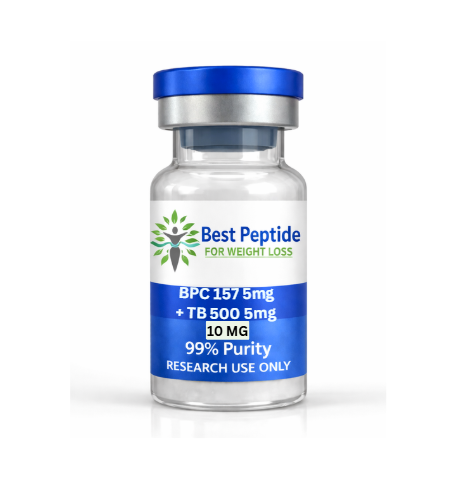
BPC 157 5mg + TB 500 5mg 10mg × 10 Vials (BB10)
$90.00
Buy BPC‑157 + TB‑500 combination 10mg × 10 vials online. Dual peptide synergy for advanced recovery.
BPC-157 & TB-500 Peptide Benefits for Weight Loss – Complete Guide (Research Overview)
BPC-157 & TB-500 peptides for weight loss research (10mg total blend) is a widely studied peptide combination used in research focused on tissue repair, inflammation control, recovery support, and systemic healing mechanisms. While these peptides are not direct fat-burning compounds, they are often included in weight-loss and body composition research models because of their indirect effects on recovery, mobility, and metabolic function. This guide explains how BPC-157 and TB-500 peptides may support weight loss-related research outcomes, along with their mechanisms, benefits, and scientific applications.
What Is BPC-157 & TB-500 peptides?
BPC-157 is a synthetic peptide derived from a protective gastric protein. It is made up of 15 amino acids and is widely studied for its role in cellular repair and inflammation regulation.
In research settings, BPC-157 is commonly associated with:
- Tissue regeneration and repair
- Gut lining protection
- Reduced inflammation response
- Accelerated healing processes
Because gut health and inflammation are closely linked to metabolism, BPC-157 is often studied in broader metabolic and weight-related research models.
What Is TB-500?
TB-500 (Thymosin Beta-4) is a synthetic version of a naturally occurring peptide involved in cell regeneration and tissue repair.
It is primarily studied for:
- Cell migration and repair
- Muscle and soft tissue recovery
- Improved blood flow and angiogenesis
- Reduced inflammatory activity
TB-500 is frequently used in research exploring recovery speed, mobility, and physical performance factors that indirectly influence fat-loss potential.
Why Combine BPC-157 & TB-500 for Weight Loss Research?
The combination of BPC-157 & TB-500 peptides for weight loss research (10mg total) is often studied for its synergistic regenerative effects.
BPC-157 Contribution:
- Supports gut and digestive system integrity
- Reduces localized inflammation
- Enhances healing of connective tissues
TB-500 Contribution:
- Improves circulation and oxygen delivery
- Enhances muscle recovery and flexibility
- Supports tissue regeneration across the body
Combined Effect:
Together, they create a full-body recovery and anti-inflammatory research stack, which may indirectly support weight-loss-related outcomes by improving physical function and recovery capacity.
BPC-157 & TB-500 Benefits for Weight Loss Research
1. Supports Recovery-Driven Fat Loss Studies
Faster recovery from physical stress allows researchers to study improved training adaptation and energy expenditure patterns.
2. Reduces Inflammation Linked to Metabolic Stress
Chronic inflammation is often associated with metabolic slowdown. These peptides are studied for their ability to reduce inflammatory markers in research models.
3. Enhances Mobility and Physical Activity Potential
TB-500 supports flexibility and tissue repair, which can help increase movement capacity in experimental models.
4. Gut Health and Metabolic Regulation (BPC-157)
BPC-157 is heavily studied for gastrointestinal protection, which may influence nutrient absorption and metabolic efficiency.
5. Tissue Repair and Lean Body Support
By improving muscle and connective tissue recovery, the combination may support lean mass maintenance in weight-related research.
How the Peptides Work
BPC-157 Mechanisms:
- Promotes collagen production
- Enhances blood vessel formation
- Supports nitric oxide pathways
- Improves cellular repair signaling
TB-500 Mechanisms:
- Increases actin regulation for cell movement
- Enhances tissue regeneration
- Supports new blood vessel growth
- Reduces inflammatory response
Combined Mechanism:
When used together, they support:
- Faster recovery cycles
- Reduced inflammation
- Improved tissue resilience
- Enhanced circulation and healing response
Research Applications
BPC-157 & TB-500 peptides for weight loss research is commonly used in:
- Injury recovery and rehabilitation models
- Muscle repair studies
- Inflammation and oxidative stress research
- Gut health and digestive system studies
- Performance recovery experiments
In weight-loss-related research, these peptides are often studied as support compounds that enhance physical recovery and metabolic efficiency indirectly.
Storage Instructions
To maintain stability and effectiveness:
- Store lyophilized vials in a cool, dry place
- Refrigerate after reconstitution (2°C–8°C)
- Avoid sunlight, heat, and moisture exposure
- Do not freeze after mixing
- Use sterile handling practices
Safety Notes
BPC-157 and TB-500 are for research use only.
Possible mild effects in studies may include:
- Temporary irritation at injection site
- Mild fatigue
- Headache or nausea
Any unexpected response should be evaluated under proper laboratory supervision.
Related Research peptides
To better understand BPC-157 & TB-500 peptide benefits for weight loss research, it is useful to explore other peptide categories that support metabolism, recovery, and body composition studies. These internal resources help connect recovery-based research with broader fat-loss and performance pathways.
- Weight loss research peptides: weight loss peptides
Explore peptides studied for fat metabolism, appetite regulation, and energy balance. - Metabolic research compounds: metabolic peptides
Learn about peptides involved in glucose control, mitochondrial activity, and metabolic efficiency. - Performance and endurance peptides: endurance peptides
View research compounds linked to stamina, recovery speed, and exercise performance. - Fat loss support peptides: fat metabolism peptides
Focus on compounds studied for lipid oxidation and body fat reduction pathways. - Peptide research collection: research peptides overview
Browse a full range of peptides used in metabolic, recovery, and regenerative studies.
Conclusion
The BPC-157 & TB-500 peptides for weight loss research combination (10mg total) is widely researched for its powerful regenerative and anti-inflammatory properties. While not directly a fat-burning stack, it plays an important role in weight loss research models by improving recovery, reducing inflammation, and supporting tissue repair.
Together, these peptides form a strong synergistic system for studying healing, performance recovery, and metabolic support mechanisms in controlled scientific environments.